Combat & Encounter Tools
Keep the battle moving. Manage monster hit points, track initiative turn order, balance challenge ratings, and roll tactical critical hits without slowing down the game.
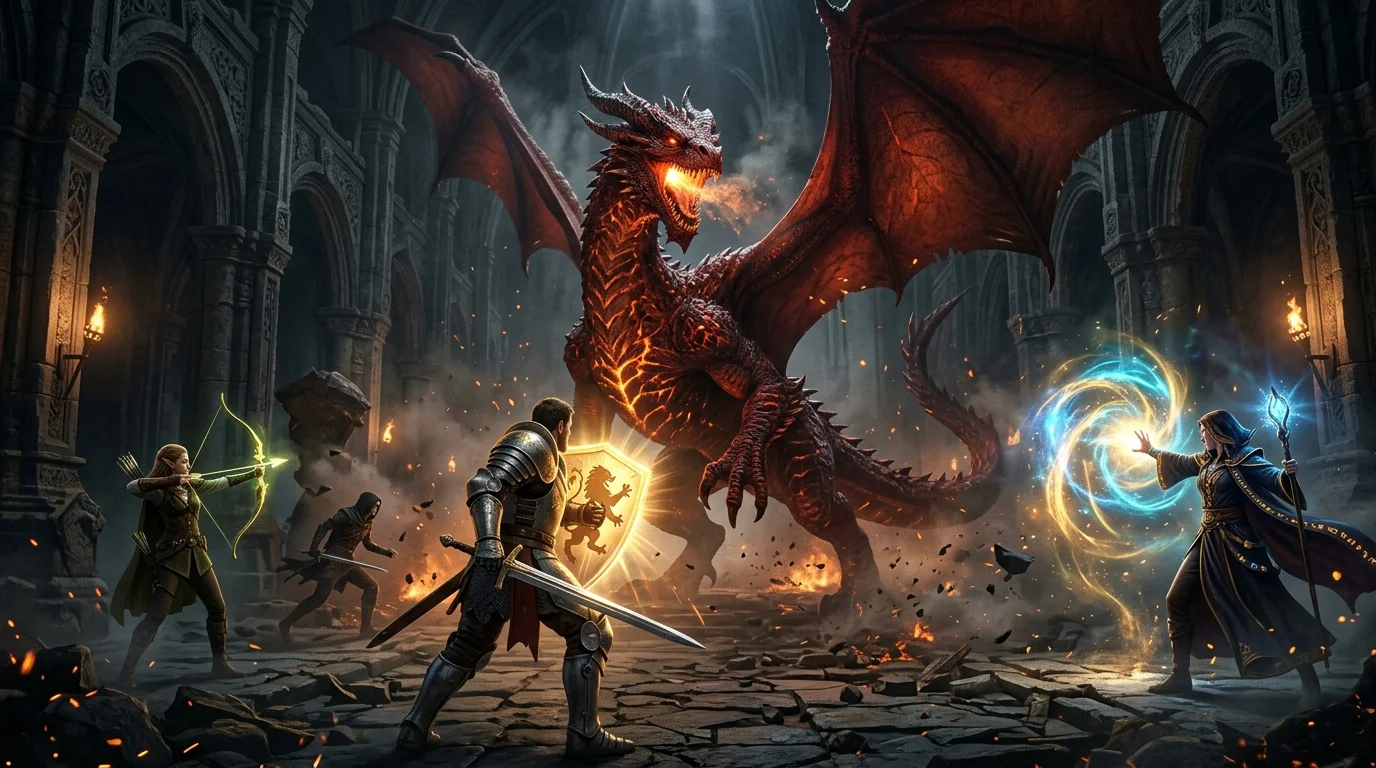
Combat & Initiative Tracker
Mobile-friendly tabletop combat tracker. Manage initiative rounds, monster and player hit points, death saves, and 14 SRD conditions with local auto-save.
5e Encounter CR Calculator
Instant encounter difficulty solver for D&D 5th Edition. Compare party size and level against monster Challenge Ratings to calculate adjusted XP and Easy/Medium/Hard/Deadly thresholds.
Critical Hit & Fumble Tables
Flavorful critical success and critical failure generator for physical attacks and magical spells. Roll cinematic descriptions and tactical effects for memorable combat moments.
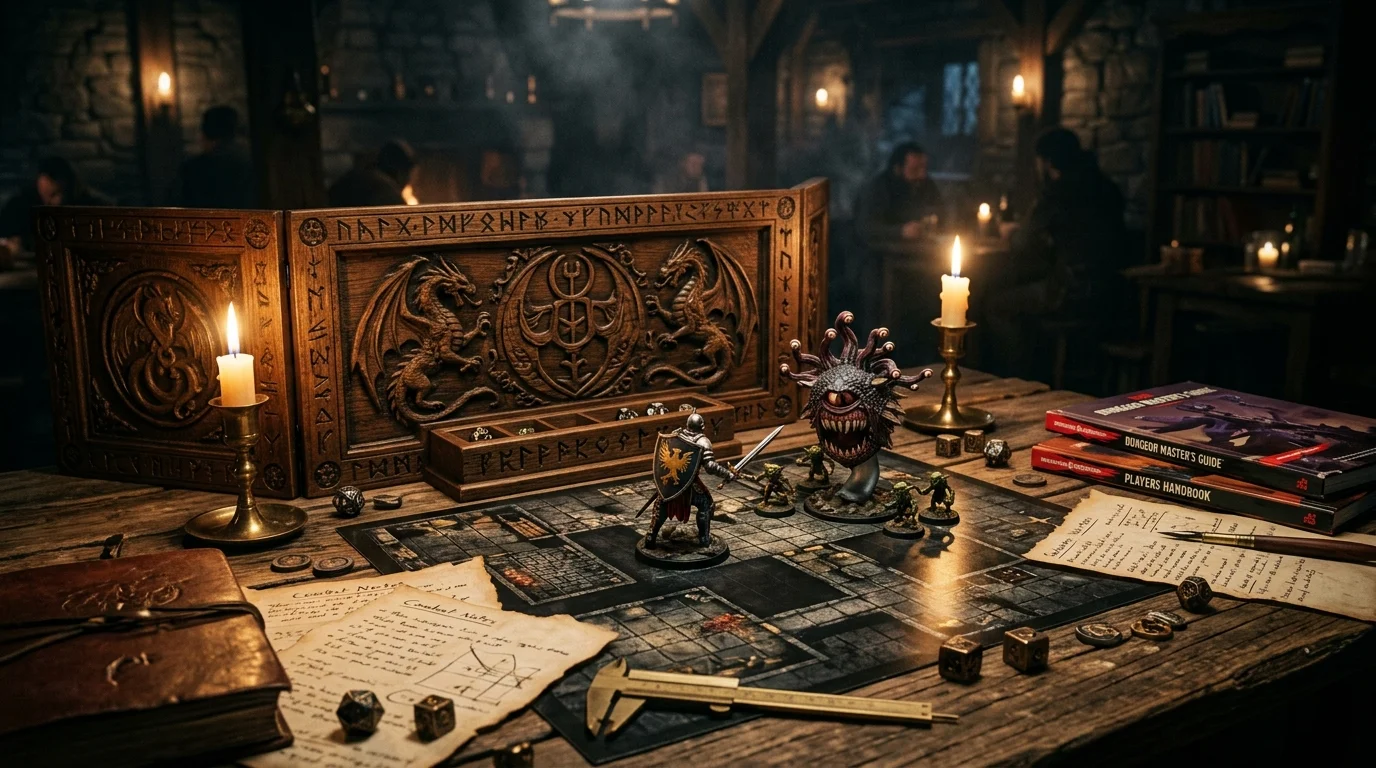
Tactical Battle Accessories
5e Combat & Encounter FAQ
Official rules guidance and quick answers from the System Reference Document 5.1.
How is encounter difficulty calculated in D&D 5e?
Under official SRD 5.1 rules, encounter difficulty is determined by comparing the party's combined XP threshold against the monsters' Adjusted XP. Each character level has four distinct XP thresholds: Easy, Medium, Hard, and Deadly. Learn more in our 5e Encounter Building Guide.
What is Adjusted XP and how do monster multipliers work?
Adjusted XP accounts for the action economy when fighting multiple foes. While raw XP is what players earn after victory, adjusted XP multiplies total monster XP by a factor: 1 monster = 1x, 2 monsters = 1.5x, 3–6 monsters = 2x, 7–10 monsters = 2.5x, 11–14 monsters = 3x, and 15+ monsters = 4x. For a deep tactical breakdown, read our analysis on Mastering Action Economy in 5e.
How does initiative work in D&D 5e?
At the start of combat, every participant makes a Dexterity check (1d20 + Dexterity modifier + any class features like Alert or Jack of All Trades). The Dungeon Master ranks all rolls from highest to lowest to form the initiative order, which remains fixed throughout the encounter. Learn how turn speed dictates victory in our Action Economy Strategy Article.
How do ties in initiative get resolved?
If a player character and a monster roll the same initiative score, the Dungeon Master decides who acts first. If two player characters tie, the tied players decide between themselves. If two monsters tie, the DM chooses their order.